
Beirut’s Architectural Resurgence: Immeuble de l’Union and Burj El Murr Revived Through Light and Reflection
The city of Beirut is witnessing a significant cultural revival as two iconic architectural structures, Immeuble de l’Union and Burj El Murr, emerge from years of neglect. This transformation highlights the ongoing intersections between history, art, and contemporary design.
Immeuble de l’Union: A Light-Filled Renaissance
Immeuble de l’Union, designed by architects Antoine Tabet and Lucien Cavro in 1952, has long stood silent, serving as a witness to Beirut’s tumultuous history. Currently, it is undergoing a renaissance led by architect Karim Nader, marking its first public reawakening through the exhibition titled Union – A Journey of Light. Co-curated by Atelier33, the exhibition prioritizes the experience of light, emphasizing the transition from day to night as part of the immersive journey.
The building, showcasing its inherent imperfections—cracks, exposed beams, and dust—serves as a canvas for the exhibition. Nader deliberately retained these features, opting for raw authenticity over polished aesthetics. This approach encapsulates the spirit of Beirut, representing the city’s essence without pretense. Visitors engage with the space in a vertical progression, mirroring a video game where each floor reveals a new artistic narrative through light and sound.
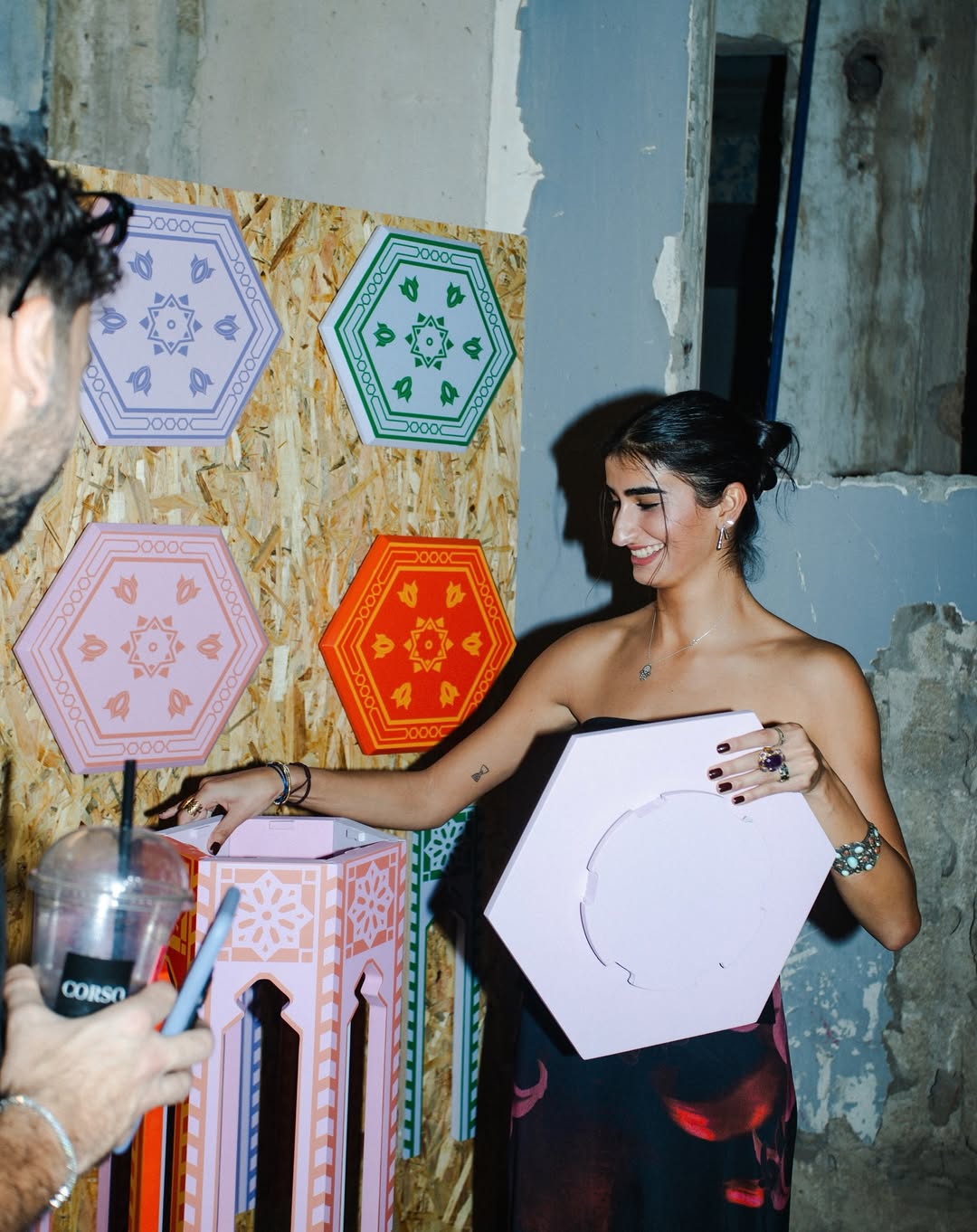
The fifth floor prominently features emerging Lebanese designers, displaying a wealth of talent and innovation. One standout piece is Tawletna, a reimagined Arabic table created by designer Zein Hageali, who employs interchangeable legs and a modular surface that snaps together. This design reinvigorates a traditional object, transforming it into a contemporary showcase of cultural memory and identity.
Burj El Murr: A Tower of Historical Significance
Another pivotal structure, Burj El Murr, has also been revived as part of the cultural initiative. Once celebrated as the tallest building in Beirut, its construction began in 1974 but was halted by the onset of the Lebanese Civil War in 1975. The tower, initially a symbol of hope and architectural progress, became a sniper’s nest during the conflict, serving as a grim reminder of the city’s violent past. Its name translates to “Tower of Bitterness,” reflecting the decades of trauma associated with its history.
Despite its troubled legacy, Burj El Murr found new life during the latest We Design Beirut (WDB) event, hosting an exhibition titled Design “In” Conflict. Curated by Archifeed founders Teymour Khoury and Yasmina Mahmoud, alongside designers Tarek Mahmoud and Youssef Bassil, this student-led initiative showcases the work of nine universities from across Lebanon. The exhibition aimed to explore the impact of conflict on identity, memory, and creativity, offering raw and introspective insights into the realities of living in a post-war society.
The Impact of Design: Deskrest
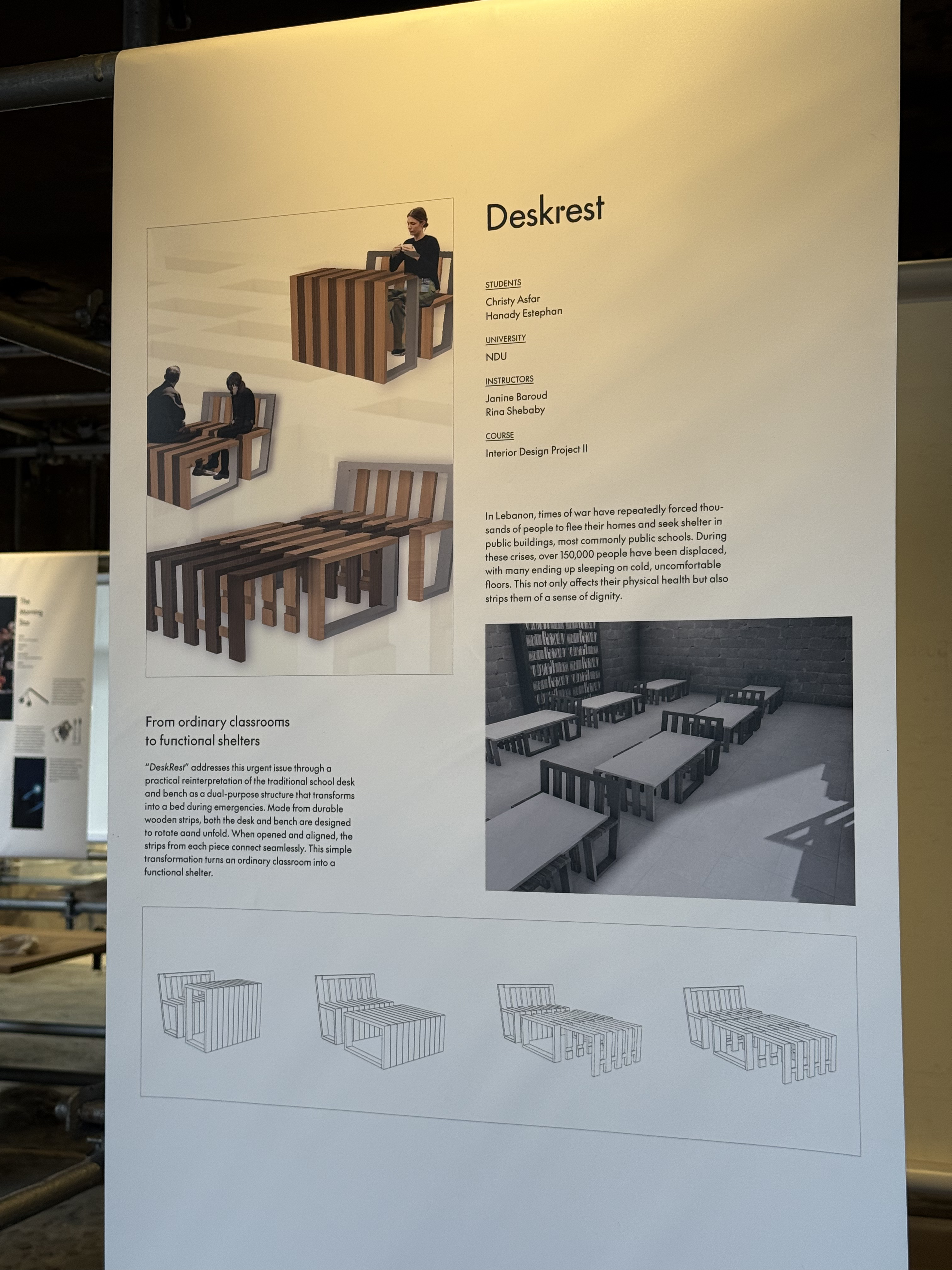
Among the exhibited works, Deskrest by Christy Asfar and Hanady Estephan stood out. This innovative design reinvents the traditional school desk and bench, transforming them into dual-purpose furniture that can convert into beds during emergencies. Constructed from interlocking wooden strips, Deskrest acknowledges the stark reality faced by many Lebanese students whose schools often act as shelters during crises.
The project underscores the need for functional and dignified solutions in the context of displacement, as over 150,000 individuals have recently been forced from their homes. By transforming ordinary school furniture into a survival tool, the design encapsulates the ongoing struggle of childhood in Lebanon where the specter of conflict is ever-present. The exhibition invites reflection on the enduring effects of war, highlighting how memories of survival continue to shape the lives of future generations.
As reported by Savoir Flair, the revival of these significant structures reveals a commitment to addressing historical traumas through the lens of contemporary design. The reawakening of Immeuble de l’Union and Burj El Murr demonstrates that architecture can serve as a bridge between the past and present, facilitating dialogue about identity, resilience, and the city’s future.